
Trying to figure out BackToFrontShow pricing before you commit to a plan? You’re not alone. Most people want a clear answer on cost before they explore the features.
This guide breaks down every plan, from Free to Enterprise, so you know exactly what you’re paying for and why. No digging through vague pricing pages required.
By the end, you’ll understand which plan fits your needs, what factors affect the final cost, and how to get the best value out of BackToFrontShow in 2026.
BackToFrontShow Pricing Overview
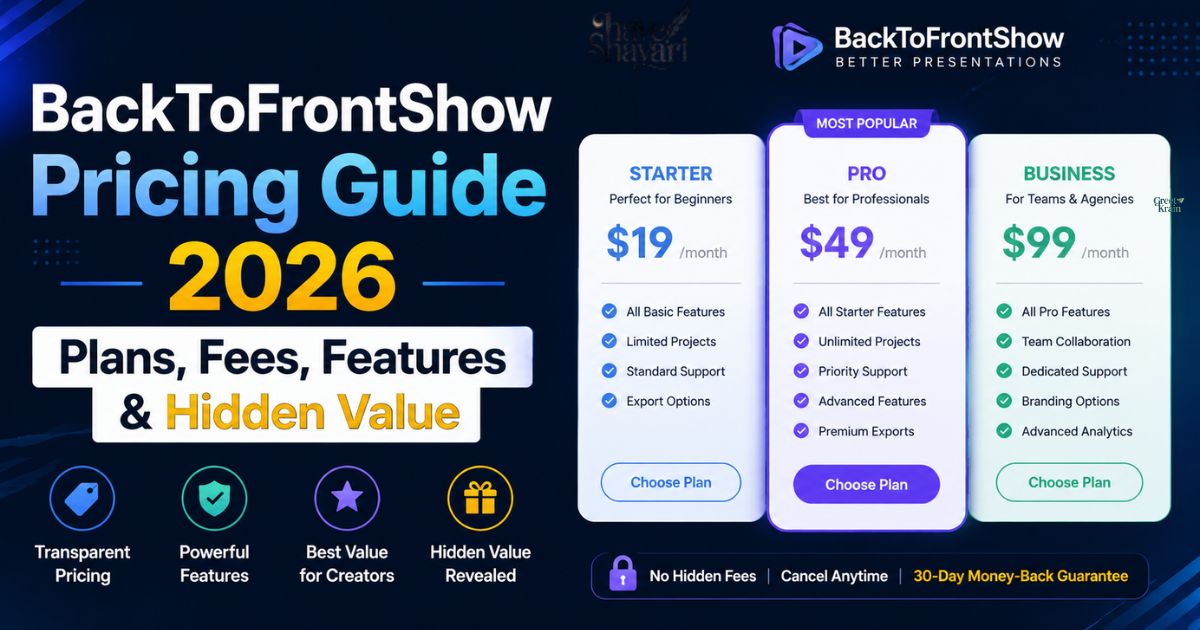
BackToFrontShow pricing is built around a tiered subscription model, giving users the option to start small and scale up as their needs grow. Instead of one flat fee, the platform separates its offering into Free, Basic, Pro, and Enterprise tiers.
Each plan unlocks a different level of access, features, and support, so pricing is closely tied to how much value a user actually needs from the platform. This makes it easier to avoid overpaying for tools you won’t use.
Below, we break down what each plan costs, what’s included, and how to decide which one fits your situation best.
Pricing Overview Table
| Plan | Monthly Price | Best For | Key Features |
| Free | $0 | First-time users testing the platform | Limited access, basic features |
| Basic | $19–$29 | Individuals and small creators | Core features, standard support |
| Pro | $49–$79 | Growing teams and power users | Advanced features, priority support |
| Enterprise | Custom | Large organizations | Full customization, dedicated support |
Prices can shift slightly depending on promotions or billing cycle, so it’s worth checking the official BackToFrontShow pricing page before committing to a plan.
BackToFrontShow Basic Plan
The Basic Plan is designed for individual users or small creators who want core functionality without a big upfront cost. It typically covers the essentials needed to get started on the platform.
This tier is a good entry point if you’re unsure how much you’ll use BackToFrontShow long-term. It keeps costs low while still giving access to the platform’s main tools.
Most users on the Basic Plan later upgrade once their usage or needs increase, making it more of a starting point than a permanent solution.
BackToFrontShow Pro Plan
The Pro Plan sits in the middle of the pricing structure and is aimed at users who need more than the basics but don’t yet require enterprise-level features. It typically adds deeper functionality and faster support.
This plan works well for growing creators, small teams, or professionals who rely on BackToFrontShow regularly as part of their workflow.
Compared to the Basic Plan, Pro users usually get priority access to new features and a higher usage ceiling.
Backtofrontshow pricing structure and core components explained in detail
The core components of BackToFrontShow pricing include a base subscription fee, feature-based add-ons, and usage limits tied to each tier. These elements combine to determine the final monthly or annual cost.
Understanding these components helps users see exactly what they’re paying for instead of just looking at the sticker price. It also makes it easier to compare plans side by side.
In most cases, the base fee covers access, while add-ons and higher usage limits account for any additional cost.
Backtofrontshow pricing tiers and subscription options available to customers
BackToFrontShow offers multiple subscription options, including monthly, annual, and in some cases lifetime access. Each option comes with its own pricing structure and trade-offs.
Monthly plans offer flexibility, while annual plans usually come with a discount for committing longer term. Lifetime options, where available, can pay off for long-term users.
Choosing between these depends on how confident you are that you’ll stick with the platform over time.
Backtofrontshow pricing comparison with similar entertainment platforms
When compared to similar platforms, BackToFrontShow generally sits in the mid-range in terms of pricing. It’s not the cheapest option available, but it’s not the most expensive either.
Some competitors offer lower entry prices but with more limited features, while others charge significantly more for similar functionality. BackToFrontShow tries to balance the two.
This positioning makes it appealing to users who want solid value without paying premium prices.
Backtofrontshow pricing booking process and how payments are typically handled
Booking and payment for BackToFrontShow is usually handled directly through the platform’s website using standard payment methods like credit or debit cards. Some plans may also support other payment options depending on the region.
Once a plan is selected, payment is typically processed immediately, and access is granted right after confirmation. Subscriptions renew automatically unless canceled beforehand.
This straightforward process is designed to minimize friction for new users signing up.
Also Like To Read This: Dreamwithjeff.com: A Practical Personal Growth Platform for Real Life Change (2026)
Why People Search for BackToFrontShow Pricing
Most people search for BackToFrontShow pricing because they want clarity before committing to a subscription. Nobody wants to sign up blind without knowing what it costs.
Since pricing details aren’t always front and center on the main site, users often turn to guides like this one to get a clear breakdown upfront.
This kind of research helps people decide whether the platform fits their budget and needs before they invest any money.
Is the Free Plan Worth Anything?
Yes, the Free Plan can be worth trying, especially for users who just want to test the platform before spending money. It typically offers limited access to core features.
While it won’t unlock everything, it’s usually enough to get a feel for how BackToFrontShow works and whether it’s a good fit.
For users who find real value in the free tier, upgrading to a paid plan later becomes a much easier decision.
The Growth Plan: For People Who Want More Hands-On Help
The Growth Plan is aimed at users who want more guidance and support than the Basic Plan offers, without jumping straight to Enterprise-level pricing. It typically includes more hands-on assistance.
This tier suits people who are scaling up their usage and want extra help along the way, rather than figuring everything out on their own.
It acts as a middle step for users who’ve outgrown the basics but aren’t yet ready for a full enterprise setup.
BackToFrontShow Enterprise Plan
The Enterprise Plan is designed for larger organizations or teams with more complex needs. Pricing here is typically custom, based on the scale and requirements of the business.
This tier usually includes advanced customization, dedicated support, and higher usage limits than any other plan on the platform.
Because pricing varies by business, most users need to contact BackToFrontShow directly to get an accurate quote for this tier.
Factors Affecting Pricing
BackToFrontShow pricing isn’t just about which plan you pick — several underlying factors also influence the final cost. These factors can push the price higher or lower depending on how the platform is used.
Understanding these variables helps users budget more accurately and avoid surprise charges down the line.
Below are the main factors that typically affect the total cost of using BackToFrontShow.
Number of Users Pricing Factor
Many pricing tiers scale based on how many users or team members need access to the platform. More users typically means a higher monthly cost.
This is common with team-based tools, since additional seats usually require additional licensing or account management.
If you’re planning to add users over time, it’s worth checking how pricing scales before committing to a plan.
Data Volume Analytics Cost
The amount of data processed or stored can also affect pricing, especially on plans with analytics or reporting features. Higher data volume usually pushes users into a more expensive tier.
This factor matters most for users with larger audiences or more frequent activity on the platform.
Keeping an eye on your data usage can help you stay within a lower-cost plan for longer.
Analytics Complexity Pricing
More advanced analytics features, like deeper reporting or behavioral insights, typically come at a higher price point. Basic plans usually only offer surface-level data.
Users who need granular insights into performance or engagement will likely need to move up to a higher tier.
This makes analytics complexity one of the bigger factors separating entry-level and premium plans.
Support Level Pricing
Support level is another factor that influences cost, with higher tiers typically offering faster response times and more direct access to help. Lower tiers often rely on email or self-service support.
Users who need quick, reliable support may find it worth paying more for a plan with priority assistance.
This is especially relevant for businesses that can’t afford downtime or delays.
Customization and Integration Cost
Plans that allow for more customization or integration with other tools tend to cost more. This is common with Enterprise-level plans built around specific business needs.
Custom integrations often require additional setup, which is usually reflected in the price.
Users who need the platform to fit into an existing tech stack should expect this to factor into their total cost.
Real-Time Data Access Cost
Access to real-time data, rather than delayed or batch-processed data, is typically a premium feature. It often pushes users toward higher-tier plans.
This factor matters most for businesses that need to make fast decisions based on up-to-the-minute information.
If real-time access isn’t critical for your use case, a lower-tier plan may be sufficient.
Billing and Scalability
BackToFrontShow’s billing structure is designed to scale alongside a user’s needs, whether that means adding more users, increasing data usage, or unlocking new features. This flexibility helps avoid locking users into a plan that no longer fits.
Most plans allow upgrades or downgrades as needs change, with billing adjusting accordingly. Annual billing often comes with a discount compared to monthly payments.
This scalable approach makes it easier for growing businesses to stay on the platform long-term without needing to switch providers.
Value of BackToFrontShow
The real value of BackToFrontShow comes down to whether the features justify the cost for your specific use case. For some users, the deeper insights and functionality easily outweigh the price.
Compared to piecing together multiple separate tools, a single platform with tiered pricing can actually save money and simplify workflows.
Ultimately, value depends on how much a user relies on the platform and how directly it contributes to their goals.
Backtofrontshow pricing booking process and how payments are typically handled
As with initial sign-up, ongoing bookings and payments are handled through the platform’s billing system, with charges applied automatically based on the chosen plan. Most transactions are processed securely online.
Users can typically manage their billing details, update payment methods, or switch plans directly from their account settings.
This self-service approach reduces the need for manual intervention when handling routine billing tasks.
Backtofrontshow pricing refund and cancellation policies explained clearly
Refund and cancellation policies for BackToFrontShow generally depend on the plan type and how much time has passed since purchase. Some plans may offer partial refunds within a set window.
Cancellations typically stop future billing but may not always refund the current billing period, depending on the platform’s terms.
It’s a good idea to review the specific refund policy for your plan before purchasing, especially for annual or lifetime options.
BackToFrontShow Pricing Discounts, Coupons & Promo Codes (2026)
BackToFrontShow occasionally offers discounts, coupon codes, or seasonal promotions that can reduce the standard subscription price. These deals are often tied to specific times of year or platform milestones.
Annual billing is another common way to save, since it usually costs less overall than paying month to month.
Checking the official site or subscribing to updates is the best way to catch active promo codes before they expire.
BackToFrontShow Pricing Comparison With Competitors (Feature vs Cost Breakdown)
When stacked against competitors, BackToFrontShow tends to offer a solid middle ground between cost and features. Budget alternatives may be cheaper but often skip advanced analytics or support.
On the other end, premium competitors may charge more while offering only marginally better features, making BackToFrontShow a reasonable value pick for many users.
Overall, the platform’s pricing structure is competitive for users who want strong functionality without paying top-tier enterprise prices elsewhere.
Frequently Asked Questions
Is BackToFrontShow free to use?
Yes, BackToFrontShow offers a Free Plan with limited access, letting new users try core features before upgrading to a paid tier.
How much does the Basic Plan cost?
The Basic Plan typically starts between $19 and $29 per month, depending on billing cycle and any active promotions.
What’s included in the Pro Plan?
The Pro Plan adds advanced features, priority support, and higher usage limits compared to the Basic Plan, usually priced between $49 and $79 per month.
Does BackToFrontShow offer annual discounts?
Yes, choosing annual billing over monthly payments usually comes with a discounted overall rate across most paid plans.
How is Enterprise pricing determined?
Enterprise pricing is custom and based on factors like number of users, data volume, and required integrations, so users need to contact BackToFrontShow directly for a quote.
Can I cancel my subscription anytime?
Yes, cancellations are typically available anytime, though refunds for the current billing period depend on the specific plan’s policy.
Conclusion
BackToFrontShow pricing is built to scale with different types of users, from beginners testing the Free Plan to large teams on Enterprise-level contracts. Knowing the tiers upfront makes it easier to pick the right fit.
Factors like user count, data volume, analytics needs, and support level all play a role in the final price, so it’s worth matching these to your actual usage before choosing a plan.
Whether you’re just starting out or scaling up, understanding this pricing structure helps you avoid overpaying while still getting the features that matter most to you.
