
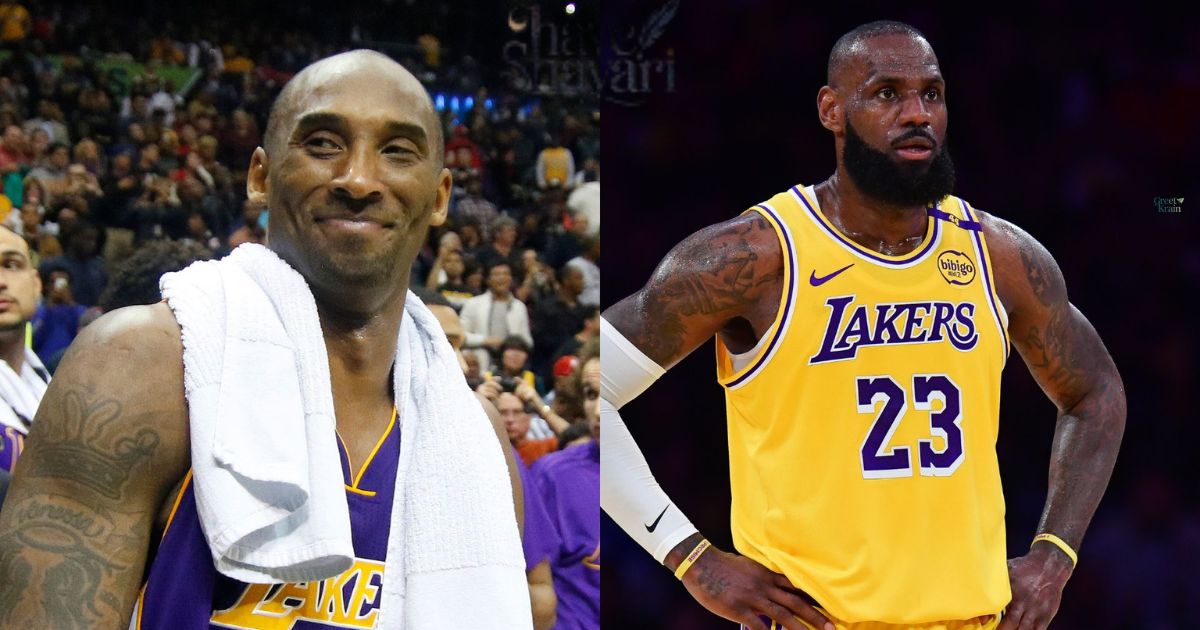
Kobe Bryant and Patrick Mahomes belong to different sports and different eras, yet fans keep drawing lines between them for good reason. Both men turned obsessive preparation into a personal brand, and both redefined what “clutch” looks like in their respective leagues. Kobe’s Mamba Mentality became a cultural shorthand for relentless work ethic long before Mahomes ever took an NFL snap.
Mahomes has openly credited Kobe as an inspiration, and that connection makes this comparison more than a hypothetical exercise. From championship counts to career earnings to the psychological edge that separates good players from legends, the parallels run deep. This article breaks down how these two icons stack up across the numbers and the mindset that built them.
Whether you’re a basketball purist, a football diehard, or just someone fascinated by greatness, this comparison offers a fresh lens on two athletes who chased perfection in strikingly similar ways. By the end, you’ll see exactly where their paths align — and where they diverge entirely.
Quick Comparison at a Glance
| Category | Kobe Bryant | Patrick Mahomes |
| Sport | Basketball (NBA) | Football (NFL) |
| Team | Los Angeles Lakers (20 seasons) | Kansas City Chiefs (ongoing) |
| Championships | 5 NBA titles | 3 Super Bowl titles |
| Finals/Super Bowl MVPs | 2x Finals MVP | 3x Super Bowl MVP |
| League MVP | 1x (2007-08) | 2x (2018, 2022) |
| All-Star Selections | 18x | 6x Pro Bowl |
| Career Points/Yards | 33,643 points | 35,000+ passing yards |
| Nickname | Black Mamba | Showtime / Money Mahomes |
| Career Earnings (salary) | ~$328 million | $450 million contract (2020) |
Kobe Bryant and Patrick Mahomes never competed on the same field or court, yet their names are tied together by something deeper than sport — an obsessive, almost self-punishing drive to win. Both became the defining face of their league during their era, both turned “clutch” into a personality trait, and both built business empires that outlasted their playing days. This comparison walks through both careers side by side, from rookie years to legacy, to see how closely Mahomes’ rise actually mirrors the Mamba blueprint.
Kobe Bryant: The Legend Who Defined Mamba Mentality
Kobe Bryant spent two decades turning obsession into an art form. He wasn’t the most physically gifted player of his generation, but he outworked nearly everyone who ever shared a court with him, arriving before sunrise and leaving after most of the arena lights went dark. That habit became the foundation of an identity that outgrew basketball entirely.
By the time he retired in 2016, Bryant wasn’t just a five-time champion — he was a cultural shorthand for relentless self-improvement. Coaches, CEOs, and athletes in completely unrelated fields began invoking his name to describe anyone who refused to accept “good enough.” Few athletes have had their approach to work become more famous than their actual highlight reel.
Early Life and Basketball Origins
Kobe Bean Bryant was born on August 23, 1978, in Philadelphia, the son of former NBA player Joe “Jellybean” Bryant. When his father’s career took the family to Italy, young Kobe grew up immersed in European basketball culture, which sharpened his footwork and fundamentals far earlier than most American prospects of his age.
He returned to the U.S. for high school at Lower Merion in Pennsylvania, where he quickly became one of the most hyped prep prospects in the country. Rather than accept a college scholarship, Bryant declared for the 1996 NBA Draft straight out of high school, a bold decision that few players had successfully made before him.
NBA Career: 20 Seasons with the Lakers
Bryant was selected 13th overall by the Charlotte Hornets in 1996 and was immediately traded to the Los Angeles Lakers, a franchise he would never leave. He spent all 20 seasons of his career in purple and gold, a level of loyalty that’s become increasingly rare in modern sports.
Over two decades, Bryant evolved from a raw, high-flying teenager into one of the most complete two-way players the league has ever produced. He built his game layer by layer — first as an explosive dunker, later as a lethal midrange scorer, and eventually as a cerebral, footwork-obsessed craftsman who could still torch defenses well into his 30s.
Championship Years with Shaq (2000-2002)
Bryant’s first taste of dominance came alongside Shaquille O’Neal, forming one of the most physically overwhelming duos in NBA history. Together they won three consecutive championships from 2000 to 2002, a run few teams have matched before or since.
The partnership was famously tense off the court, with both stars clashing over who deserved to be “the guy.” That friction eventually fractured the pairing, but on the floor it produced a dynasty that reshaped the league’s power structure for years.
The Solo Champion Era (2009-2010)
After O’Neal was traded away in 2004, Bryant spent several seasons proving he could lead a team on his own terms, without a co-star to share the spotlight or the blame. That chapter culminated in back-to-back championships in 2009 and 2010, both of which earned him Finals MVP honors.
These titles mattered more to his legacy than the earlier ones because they were unmistakably his. There was no Shaq to credit or debate — just Bryant, a supporting cast he had helped mold, and a killer instinct that reporters and opponents began describing in almost mythical terms.
Career Statistics and Records
Across 1,346 regular-season games, Bryant averaged 25.0 points, 5.2 rebounds and 4.7 assists per game, numbers that place him among the most efficient high-volume scorers in league history. He finished his career with 33,643 total points, a mark that remained near the top of the all-time scoring list for years after he retired.
His signature statistical explosion came on January 22, 2006, when he dropped 81 points on the Toronto Raptors, the second-highest single-game total in NBA history behind Wilt Chamberlain’s 100-point game. Across his career he recorded six separate 60-point outings, underscoring just how often he was capable of taking over a game single-handedly.
Read More: Alina Thyregod Age, Height, Family Life, Career & Net Worth (2026 Update)
Accolades and Awards
Bryant’s trophy case reflects both individual dominance and sustained team success, a combination very few players in any sport have managed to hold simultaneously.
- 5x NBA Champion (2000, 2001, 2002, 2009, 2010)
- 1x NBA MVP (2007-08)
- 2x NBA Finals MVP (2009, 2010)
- 18x NBA All-Star, 4x All-Star Game MVP
- 11x All-NBA First Team, 12x All-Defensive Team
- 2x NBA scoring champion (2006, 2007)
- Naismith Basketball Hall of Fame inductee, 2020
Mamba Mentality: The Philosophy
“Mamba Mentality” wasn’t a marketing slogan Bryant invented late in his career — it was a lifelong obsession with mastering the smallest details of his craft that fans eventually gave a name to. It centered on the idea that greatness isn’t a talent you’re born with but a habit you build through relentless, often unglamorous repetition.
The philosophy demanded total honesty with yourself: acknowledging weaknesses, attacking them methodically, and refusing to let comfort or praise slow that process down. Bryant famously trained in empty gyms at 4 a.m., not because anyone was watching, but because he genuinely believed that’s what separated good players from legendary ones.
What made the mentality resonate so far beyond basketball is that it wasn’t really about basketball at all. It was a framework for discipline that businesspeople, coaches, and athletes in entirely different sports could adopt, which is exactly how it found its way into an NFL locker room in Kansas City.
Tragic Death and Legacy
On January 26, 2020, Bryant died in a helicopter crash in Calabasas, California, alongside his 13-year-old daughter Gianna and seven other passengers. The loss sent shockwaves through the sports world that extended far beyond basketball fans, with tributes pouring in from athletes across every major league.
In the years since, Bryant’s influence has arguably grown rather than faded. His name and mentality have become a permanent part of sports vocabulary, invoked by everyone from NBA rookies to Olympic sprinters to NFL quarterbacks preparing for the biggest games of their careers.
Patrick Mahomes: The Quarterback Channeling Kobe’s Mentality
Patrick Mahomes has spent his career building a résumé that increasingly draws comparisons to the all-time greats of football, but he’s also been unusually candid about the fact that a chunk of his mental approach was borrowed directly from Bryant. He didn’t grow up dreaming of throwing footballs the way most NFL quarterbacks did — his early sports hero came from an entirely different game.
That cross-sport admiration turned into something more concrete once Mahomes reached the NFL’s biggest stages, where he began openly crediting Bryant’s competitive standard for shaping how he prepares and how he refuses to be satisfied after a win.
Early Life and Football Journey
Mahomes was born on September 17, 1995, in Tyler, Texas, the son of former MLB pitcher Pat Mahomes. Growing up around professional locker rooms gave him an early education in what it took to compete at the highest level, even though his father’s sport was baseball rather than football.
He starred at Texas Tech University as a three-sport athlete in high school before becoming a record-breaking college quarterback, known for an unorthodox, gunslinger style that combined raw arm talent with an almost reckless improvisational instinct.
NFL Career: Rapid Rise to Legend Status
Mahomes was drafted by the Kansas City Chiefs in 2017 and spent his rookie season as a backup, absorbing the offense from the sideline before taking over as the full-time starter in 2018. That waiting period turned out to be brief compared to the trajectory that followed.
Within just a few seasons, Mahomes had transformed the Chiefs from a solid AFC contender into the league’s defining dynasty of the era, racking up MVP awards, Super Bowl trophies, and highlight-reel plays at a pace that few young quarterbacks in NFL history have matched.
Mahomes explained that his mindset is similar to what Bryant displayed during his own playing career, repeating Bryant’s famous line that “the job’s not finished” even after reaching consecutive Super Bowls. That refusal to feel satisfied became something of a personal motto heading into his biggest games.
Breakout Second Season (2018)
In just his second professional season, Mahomes threw for 50 touchdowns and over 5,000 yards, numbers that immediately put him in rare company among NFL passers. The performance earned him the NFL Most Valuable Player award, making it his first MVP after throwing for 50 touchdowns and 5,097 yards that year.
The 2018 season didn’t just establish Mahomes as a star — it announced a stylistic shift in the league, with his no-look passes and sidearm throws inspiring a wave of young quarterbacks to play with similar creative freedom.
First Super Bowl Victory (Super Bowl LIV, 2020)
Mahomes delivered his first championship in Super Bowl LIV, leading the Chiefs to a 31-20 comeback win over the San Francisco 49ers. He threw two fourth-quarter touchdowns to seal the victory, capping a game that also earned him his first Super Bowl MVP award. r
The win ended a 50-year championship drought for the Chiefs franchise and confirmed that Mahomes’ rapid ascent wasn’t a fluke built on one hot season — it was the start of a genuine dynasty.
Super Bowl LVII (2023) and LVIII (2024)
Mahomes added two more championships in quick succession, defeating the Philadelphia Eagles 38-35 in Super Bowl LVII and then the San Francisco 49ers 25-22 in overtime during Super Bowl LVIII. He was named MVP of both games, joining Tom Brady and Joe Montana as the only quarterbacks to win at least three Super Bowl MVP awards.
The overtime win in Super Bowl LVIII was particularly Kobe-esque in tone — Mahomes led a game-winning drive under maximum pressure, the exact scenario his idol built an entire reputation around. He finished that game 34-of-46 for 333 yards and two touchdowns, adding 66 rushing yards on nine carries, and delivered the winning score with a short pass to Mecole Hardman.
Career Statistics (as of 2024)
Awards and Honors
Mahomes’ award collection, while compiled in far fewer seasons than Bryant’s, already places him among the most decorated quarterbacks of any era.
- 3x Super Bowl Champion (LIV, LVII, LVIII)
- 3x Super Bowl MVP
- 2x NFL MVP (2018, 2022)
- 6x Pro Bowl selection
- 2x First-Team All-Pro
- NFL single-season offensive yardage record holder (2022)
How Patrick Mahomes Inspired by Kobe Bryant
Mahomes has repeatedly pointed to Bryant as one of the athletes he studies most, despite never having played the same sport. He’s said he watches YouTube videos of Bryant before his own games, drawn to how Bryant “put everything in perspective,” on and off the court.
What separates this admiration from a generic athlete tribute is how specific Mahomes gets about what he’s actually taking from it. He’s cited Bryant’s daily work ethic and the intensity required to be great every single day as the exact traits he tries to replicate. It’s less about basketball technique and entirely about the discipline behind it.
Direct Quotes from Mahomes About Kobe
Following the Chiefs’ AFC Championship win ahead of Super Bowl LV, Mahomes said Kobe had one of the best mentalities of all time as a competitor focused on winning championships rather than just games, adding that he takes a lot from that approach of showing up every day unsatisfied with where he’s at.
Mahomes also admitted he never got the chance to meet Bryant personally but said the impact Bryant had on his life was enormous, specifically pointing to Bryant’s work ethic and daily intensity as something he witnessed and absorbed as a kid. That distinction — inspired by a man he never actually met says a lot about how far Bryant’s influence traveled beyond basketball.
Mamba Mentality in Football
Bryant’s influence on the NFL didn’t start or end with Mahomes. He addressed the Philadelphia Eagles during their Super Bowl-winning 2017 season and later spoke to the Browns, Patriots, and Chargers, with the 2018 Saints even adopting “Mamba Mentality” as a team rallying cry. Football locker rooms had already been borrowing his language for years before Mahomes made the connection explicit.
Bryant’s own “job not finished” line dates back to June 2009, when he used it after the Lakers took a 2-0 lead in the NBA Finals a phrase Mahomes later adopted almost word for word heading into his own championship runs, treating each new success as a floor rather than a ceiling.
Business Blueprint Follow
The Bryant-to-Mahomes connection runs deeper than mentality quotes — it extends into business strategy. Bryant was an early investor in the sports drink brand BodyArmor, a bet that paid off enormously when Coca-Cola acquired the company. Mahomes has followed a strikingly similar playbook, becoming the lead investor and face of Throne Sport Coffee, a ready-to-drink beverage brand built by some of the same beverage-industry veterans behind BodyArmor’s rise.
Both athletes treated their business ventures the way they treated their sport: not as passive endorsement deals, but as competitions to be won through genuine involvement. Mahomes has said he’s engaged with his coffee brand on a weekly basis, mirroring the hands-on approach Bryant took with his own post-basketball investments.
Similarities Between Kobe and Mahomes
| Trait | How It Shows Up |
| Never-satisfied mindset | Both openly reject celebrating past wins as “enough” |
| Franchise loyalty | Bryant stayed with the Lakers 20 years; Mahomes has spent his entire career with the Chiefs |
| Clutch reputation | Both are defined by performance in win-or-go-home moments |
| Business ambition | Both built serious post-athletic investment portfolios, not just endorsements |
| Cultural crossover | Both became reference points used in sports well outside their own |
Beyond the surface-level comparisons, both men share a willingness to be publicly demanding of themselves in a way that occasionally reads as cold to outsiders. Neither has been especially interested in appearing humble for its own sake — both have been comfortable stating plainly that they expect to win, every time.
Differences Between Kobe and Mahomes
| Trait | Kobe Bryant | Patrick Mahomes |
| Sport structure | Individual matchups within team sport | Highly team-dependent, single-elimination playoffs |
| Playing style | Methodical, footwork-driven scorer | Improvisational, high-risk, high-reward passer |
| Public persona | Intensely private, guarded competitor | Openly emotional, frequently smiling on camera |
| Career length so far | Full 20-season career | Career still in progress |
| Legacy status | Fully written and permanently sealed | Still being actively built |
The biggest structural difference is simply timing. Bryant’s legacy is a finished book, while Mahomes’ story still has unwritten chapters, which makes any direct statistical comparison inherently unfair to whichever side is judged at a given moment.
Career Trajectory Comparison: Could Mahomes Eclipse Kobe?
Comparing an in-progress quarterback career to a completed 20-year basketball legacy is tricky, but the pace of Mahomes’ championship accumulation is genuinely historic. Some analysts have pointed out that Mahomes reached three Super Bowls within his first eight seasons, a similar rate to Bryant’s three championships in his first six seasons alongside Shaquille O’Neal.
Where the comparison gets complicated is longevity and raw statistical volume. Bryant’s five championships and 33,643 career points remain a benchmark that would take Mahomes many more seasons to approach in terms of sheer legacy depth, especially since NFL careers are typically shorter and more injury-prone than NBA careers.
Why Mahomes Could surpass Kobe’s Impact
There’s a case to be made that Mahomes’ ceiling is even higher than Bryant’s, purely because of how much the sports landscape has changed. Football is the most-watched sport in America by a wide margin, giving Mahomes a media reach during his prime years that basketball simply didn’t offer Bryant at the same career stage.
Mahomes is also entering his business ventures far earlier than Bryant did, giving him a longer runway to build a post-playing empire while his playing days are still generating headlines. If his on-field success continues at anywhere near its current pace, the combination of championships, marketability, and business ambition could eventually put his broader cultural footprint on par with, or beyond, Bryant’s.
Still, this remains speculative until Mahomes’ career actually concludes. Bryant’s legacy benefits from finality — nothing can diminish it retroactively — while Mahomes’ story could still include setbacks, decline, or simply not matching Bryant’s longevity.
Cultural Impact and Legacy
Kobe Bryant’s Global Legacy
Bryant’s reach extended well beyond American basketball fans, particularly in international markets like China and the Philippines, where he remains one of the most beloved athletes in any sport. His death triggered a global outpouring that rivaled tributes typically reserved for heads of state, a reflection of just how far his influence had spread beyond the hardwood.
His “Mamba Mentality” brand has continued generating books, youth basketball academies, and motivational content years after his passing, proving that his approach to work has an audience well beyond people who ever watched him play.
Patrick Mahomes’ Emerging Legacy
Mahomes’ cultural footprint is still expanding in real time, bolstered by his marriage to Brittany Mahomes, his ownership stake in the Kansas City Current soccer club, and an increasingly visible business portfolio beyond football. He’s become a rare crossover star recognized by casual sports fans and non-sports fans alike.
His approachable, frequently smiling public image is a notable contrast to Bryant’s guarded intensity, yet it hasn’t stopped him from being taken just as seriously as a competitor. If anything, it’s made his “job’s not finished” mentality feel more surprising, and more quotable, coming from someone who seems so at ease off the field.
Tribute Moments
The Super Bowl LIV week in January 2020 became an unplanned tribute to Bryant, coming just days after his death. Players, coaches, and executives across the league spent that week discussing his impact, with Bryant becoming the dominant topic of media day despite never having played football himself.
Since then, Mahomes has continued referencing Bryant in postgame interviews and championship celebrations, ensuring that the Mamba Mentality remains part of the conversation every time the Chiefs chase another ring — a small but consistent thread connecting two legends from entirely different sports.
FAQ’s
Did Patrick Mahomes ever meet Kobe Bryant?
There’s no widely documented in-person meeting between the two, but Mahomes has spoken publicly and repeatedly about how Kobe’s mindset shaped his own approach to the game.
How many championships does each athlete have?
Kobe won five NBA titles with the Los Angeles Lakers. Mahomes has three Super Bowl championships in four appearances as of the 2025 season, with his career still active.
Who has a higher career earnings total, Kobe or Mahomes?
Kobe earned roughly $680 million in career NBA salary alone, not counting endorsements. Mahomes signed a record-setting contract extension with the Chiefs, and with an active career, his total earnings are still climbing and could eventually surpass Kobe’s basketball earnings.
What is Mamba Mentality, and how does it apply to football?
Mamba Mentality is Kobe’s philosophy of relentless self-improvement, extreme preparation, and refusing to accept limitations. Mahomes has translated similar principles into his own routine — extra film study, off-season training intensity, and a refusal to settle after big wins.
Could Mahomes eventually surpass Kobe’s legacy?
It depends on the metric. In terms of championships and cultural longevity, Mahomes still has years to build his case. In terms of global brand and crossover influence, Kobe’s legacy set a bar that took decades to build.
Why do fans compare an NBA player to an NFL quarterback?
Both athletes are defined less by their sport and more by their mindset. The comparison isn’t really about basketball versus football — it’s about what elite mental toughness looks like across any arena.
Conclusion
Kobe Bryant and Patrick Mahomes represent two different sports united by one shared trait: an unwillingness to be ordinary. Kobe built his legend through five championships, obsessive film study, and a mentality so distinct it became a global vocabulary word. Mahomes is writing his own version of that story in real time, one Super Bowl run at a time.
Mahomes has already claimed three Super Bowl MVP awards across his championship wins, and with his career far from over, the comparisons to Kobe’s dominance will only intensify. What connects them isn’t statistics alone — it’s the shared belief that talent means nothing without relentless work behind it.
Whether Mahomes eventually eclipses Kobe’s impact remains an open question, but one thing is certain: both athletes turned pressure into fuel, and both changed how we define greatness in modern sports. Their stories will keep inspiring the next generation of athletes long after the final whistle blows.
