
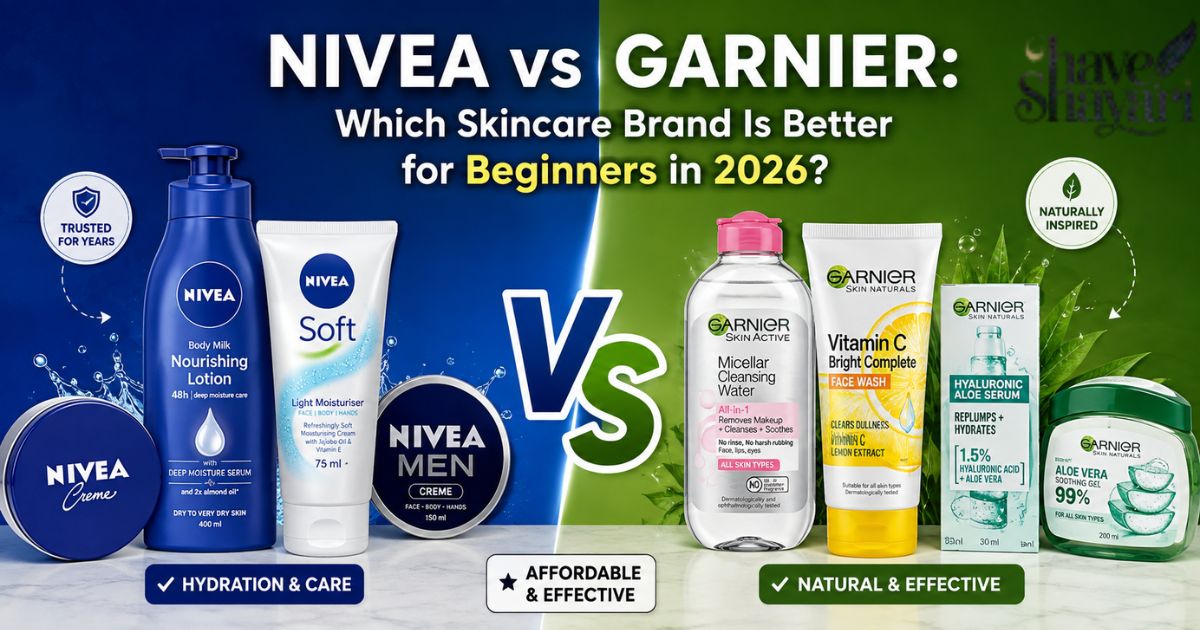
Picking your first skincare brand can feel overwhelming with so many options lining drugstore shelves. Nivea and Garnier are two of the most trusted, budget-friendly names in the game, but they serve very different skin needs.
This guide breaks down exactly how Nivea and Garnier compare across hydration, oil control, brightening, and everyday routine building. By the end, you will know exactly which brand — or combination of both fits your skin type best in 2026.
Nivea vs Garnier: Key Differences for Newbies
Choosing between Nivea and Garnier can feel confusing when you are just starting your skincare journey. Both brands are affordable, widely available, and trusted by millions of users across the globe. Understanding their core differences early on saves you time, money, and unnecessary trial and error.
Nivea has built its reputation on deep moisturization and gentle formulas suited for dry and sensitive skin types. Garnier, on the other hand, is known for its oil-control products and brightening solutions that work well for oily and dull skin. This fundamental difference shapes which brand suits your specific skin concerns.
For beginners, the real question is not which brand is objectively better, but which one aligns with your skin type and daily routine goals. This guide breaks down both brands step by step so you can make a confident choice in 2026.
What Is Nivea?
Nivea is a German skincare brand founded in 1911, known globally for its iconic blue tin moisturizer. Over the decades, it has expanded into a full range of products including face creams, body lotions, cleansers, and sun protection formulas. Its core focus remains hydration and skin barrier support.
The brand is especially popular among people with dry, sensitive, or mature skin because of its rich, creamy textures. Nivea formulas typically include glycerin, shea butter, and other emollient-rich ingredients that lock in moisture for hours.
Beginners often gravitate toward Nivea because its products are simple, fragrance-light in many lines, and gentle enough for daily use without overwhelming the skin.
What Is Garnier?
Garnier is a French beauty brand under the L’Oréal group, recognized for its plant-based and fruit-extract skincare lines. It has built a strong identity around micellar water, vitamin C brightening products, and oil-control solutions for acne-prone skin.
Unlike Nivea’s moisture-first approach, Garnier leans into lightweight, fast-absorbing textures designed for oily and combination skin types. Many of its bestsellers, like the Micellar Cleansing Water, focus on effective yet gentle cleansing.
For beginners dealing with excess oil, dullness, or early acne concerns, Garnier often becomes the go-to introductory brand due to its approachable pricing and targeted formulas.
Nivea vs Garnier: Key Differences
The biggest distinction lies in texture and purpose. Nivea products tend to be thicker and more occlusive, ideal for locking in hydration, while Garnier products are typically lighter and formulated to control shine and refine skin tone.
Ingredient philosophy also differs significantly between the two brands. Nivea relies heavily on classic moisturizing agents like glycerin and panthenol, while Garnier incorporates active ingredients such as vitamin C, salicylic acid, and micellar technology for targeted results.
Price points are similar across both brands, making affordability a non-factor in the decision. The real differentiator for beginners should be matching product formulation to their specific skin type and primary concern.
Nivea vs Garnier: Which One Should You Choose?
If your skin leans dry, sensitive, or you live in a cold or low-humidity climate, Nivea is generally the safer starting point. Its moisture-locking formulas help repair and maintain a healthy skin barrier without causing irritation.
If you struggle with oiliness, clogged pores, or uneven skin tone, Garnier’s lighter and more active-focused formulas are likely to deliver faster visible improvements. Its micellar and brightening lines are specifically built for these concerns.
Many beginners actually end up using both brands together, choosing a Nivea moisturizer alongside a Garnier cleanser, since the two brands complement rather than compete with each other in a full routine.
Also Like To Read This: Robthecoins Business Tips (2026): Practical Strategies to Grow Your Business Faster
Which Brand Fits Your Skin Type Best
Skin type is the single most important factor when deciding between Nivea and Garnier. What works beautifully for dry skin can feel heavy and pore-clogging on oily skin, and vice versa. Identifying your skin type correctly is the first real step toward building an effective routine.
Dry and sensitive skin types typically need richer, barrier-supporting formulas that Nivea specializes in. Oily, combination, and dull skin types usually respond better to Garnier’s lighter, oil-balancing, and brightening product lines.
Combination skin users often find the most success by mixing products from both brands, using richer Nivea creams on drier areas like cheeks and lighter Garnier formulas on oilier zones like the T-zone.
Nivea Strengths for Dry and Sensitive Skin
Nivea’s greatest strength lies in its ability to restore and maintain skin hydration over long periods. Its creams create a protective barrier on the skin’s surface, reducing water loss and easing symptoms like flakiness, tightness, and rough texture.
Sensitive skin users benefit from Nivea’s generally minimal ingredient lists and lower fragrance concentrations in many of its core products. This reduces the likelihood of irritation, redness, or breakouts, making it a safer entry point for beginners with reactive skin.
Beyond basic hydration, Nivea also offers targeted solutions like its Soft Cream and Creme variants, which have remained bestsellers for decades due to their consistent, reliable performance on dry and sensitive skin types.
Core Ingredients in Nivea Moisturizers
Glycerin is one of Nivea’s most consistently used ingredients, acting as a humectant that draws moisture into the skin from the environment. This helps maintain hydration levels throughout the day without feeling greasy.
Shea butter and other emollients are commonly found in Nivea’s richer formulas, providing a soothing, cushioning effect on rough or irritated skin. These ingredients help repair the skin barrier over time with consistent use.
Panthenol, also known as pro-vitamin B5, appears in several Nivea products and is known for its calming and healing properties, making it especially useful for beginners dealing with mild irritation or sensitivity.
Garnier Strengths for Oily and Dull Skin
Garnier excels at addressing excess oil production and dullness through lightweight, fast-absorbing formulas. Its products are designed to cleanse thoroughly without stripping the skin, which helps prevent the rebound oiliness that harsh cleansers can cause.
The brand’s brightening line, often infused with vitamin C, targets dullness and uneven skin tone effectively. Beginners looking for visible improvement in skin radiance often see noticeable results within a few weeks of consistent use.
Garnier also offers acne-focused formulas with ingredients like salicylic acid, which help unclog pores and reduce breakouts. This makes it a strong choice for younger users or anyone new to managing oily, acne-prone skin.
Garnier Micellar Water Benefits
Micellar water is arguably Garnier’s most iconic product, using tiny oil molecules called micelles to attract and lift away dirt, makeup, and impurities without harsh rubbing. This makes it gentle enough for daily use, even on sensitive areas like around the eyes.
For beginners, micellar water simplifies the cleansing step significantly since it requires no rinsing and works as both a makeup remover and light cleanser in one product. This convenience makes it a popular first product for those new to skincare routines.
Regular use of Garnier’s micellar water can also help balance oil production over time, since it cleanses effectively without over-drying the skin, which often triggers the skin to produce even more oil as compensation.
Building a Simple Beginner Routine
A good beginner routine does not need to be complicated or expensive. Combining the right Nivea and Garnier products based on your skin type can create an effective, easy-to-follow regimen that delivers visible results within weeks.
The key is layering products correctly, starting with cleansing, followed by targeted treatment, and finishing with moisturizer and sun protection. Beginners often make the mistake of skipping steps or using too many products at once, which can overwhelm the skin.
Consistency matters more than product quantity when building any skincare routine. Sticking to a simple two or three-step routine daily will almost always outperform an inconsistent, complicated ten-step approach.
Acne and Oil Control: Nivea vs Garnier
Garnier generally takes the lead for acne and oil control thanks to its salicylic acid-infused products and lightweight, non-comedogenic formulas. These are specifically designed to unclog pores and regulate sebum production without adding extra oil to the skin.
Nivea’s offerings in this space are more limited, as the brand’s core identity leans toward hydration rather than active acne treatment. However, some of its lighter gel-based moisturizers can still work for combination skin dealing with mild breakouts.
For beginners with persistent acne or excess oil, starting with Garnier’s targeted cleansers and treatments is typically the more effective route, while reserving Nivea products for areas needing extra hydration.
Brightening and Visible Results: Nivea vs Garnier
Garnier’s vitamin C-based brightening line is specifically formulated to fade dark spots, even out skin tone, and add radiance over consistent use. Beginners often notice a visible glow within a few weeks when using these products regularly.
Nivea does not heavily market brightening as a core focus, though some of its moisturizers include ingredients that support overall skin health and indirectly improve texture and tone over time.
If visible brightening results are your primary goal, Garnier’s targeted formulas will likely deliver faster, more noticeable outcomes compared to Nivea’s more general moisturizing approach.
Pros and Cons
Nivea’s pros include deep hydration, gentle formulas for sensitive skin, and affordability, while its cons include limited options for acne or brightening concerns and occasionally heavier textures for oily skin types.
Garnier’s pros include effective oil control, brightening results, and lightweight textures, while its cons include the potential for over-drying on already sensitive skin if used excessively or without proper moisturizing follow-up.
Weighing these pros and cons against your own skin type and goals will help you decide whether to lean more heavily on one brand or combine both for a balanced routine.
Daily Routine Steps for Beginners
Start each morning by cleansing with a gentle formula, such as Garnier’s micellar water, followed by a lightweight moisturizer to maintain hydration throughout the day. Finish with sunscreen, as sun protection is non-negotiable for any beginner routine.
In the evening, double cleanse if wearing makeup or sunscreen, using micellar water first followed by a gentle face wash. Follow up with a richer Nivea moisturizer to support overnight skin repair and hydration.
Two to three times a week, consider adding a targeted treatment product, such as a vitamin C serum or salicylic acid treatment, depending on whether brightening or acne control is your primary concern.
Common Mistakes to Avoid
One common mistake beginners make is over-cleansing, which strips the skin’s natural oils and can lead to increased sensitivity or rebound oiliness. Stick to cleansing twice daily at most, unless heavy sweating or makeup requires an extra step.
Another frequent error is skipping sunscreen, even when using brightening or active ingredient products. Sun protection is essential to prevent further pigmentation and to protect the skin barrier from UV damage.
Layering too many active ingredients at once, such as combining vitamin C with strong exfoliants, can also irritate beginner skin. It is best to introduce new products one at a time and monitor how your skin responds.
Final Pick: Start Here in 2026
For beginners with dry or sensitive skin, starting with Nivea’s core moisturizing range offers a gentle, low-risk entry point into skincare. Its simple formulas are unlikely to cause irritation while effectively addressing hydration needs.
For beginners with oily, acne-prone, or dull skin, Garnier’s micellar water paired with a brightening or oil-control product provides a more targeted and results-driven starting point in 2026.
Ultimately, there is no universally “better” brand between the two, only a better fit based on individual skin type and concerns. Testing a few key products from each brand is the most reliable way to discover what works best for you.
Affordable Drugstore Upgrades Over Time
As your skin adjusts to a basic routine, consider upgrading to Garnier’s more advanced vitamin C serums or Nivea’s specialized night creams for enhanced results without significantly increasing your budget.
Both brands regularly release new formulations, including SPF-infused moisturizers and targeted treatment serums, making it easy to upgrade your routine incrementally as your skincare knowledge grows.
Sticking with drugstore staples from Nivea and Garnier remains a smart long-term strategy, since both brands consistently deliver reliable results at accessible price points, even as you introduce more advanced products over time.
FAQ’s
Is Nivea better than Garnier for dry skin?
Yes, Nivea is generally better for dry skin because its formulas focus on deep hydration using ingredients like glycerin and shea butter that lock in moisture.
Is Garnier better than Nivea for oily skin?
Yes, Garnier is typically better for oily skin since its products are lightweight, oil-balancing, and often include salicylic acid to control shine and breakouts.
Can I use Nivea and Garnier products together?
Yes, many beginners combine both brands, using Garnier for cleansing and oil control and Nivea for deep moisturizing, especially on drier areas of the face.
Which brand is more affordable, Nivea or Garnier?
Both brands are similarly priced and widely available at drugstores, so affordability is not a major deciding factor between the two.
Does Garnier help with dark spots and dullness?
Yes, Garnier’s vitamin C-based brightening line is specifically designed to fade dark spots and even out skin tone with consistent use.
Is Nivea good for sensitive skin beginners?
Yes, Nivea is often recommended for sensitive skin beginners due to its gentle, minimal-ingredient formulas that reduce the risk of irritation.
Conclusion
Choosing between Nivea and Garnier ultimately comes down to your skin type and primary skincare goals. Nivea shines for dry, sensitive skin that needs deep hydration, while Garnier stands out for oily, dull, or acne-prone skin that needs lightweight, targeted care.
Rather than picking one brand exclusively, many beginners find the best results by blending products from both using Garnier for cleansing and oil control, and Nivea for daily moisturizing. Starting simple and staying consistent will always matter more than the brand name itself in 2026.
