
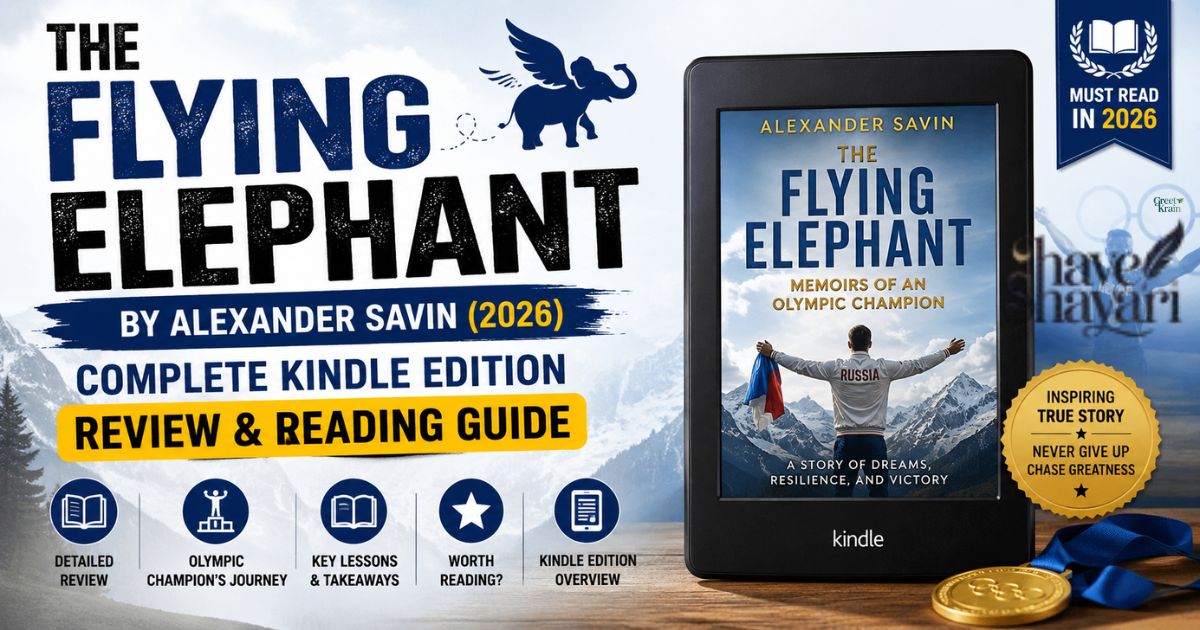
Some sports memoirs promise medals and highlight reels. The Flying Elephant: Memoirs of an Olympic Champion, written by Soviet volleyball legend Alexander Savin, takes a different path, leaning into the discipline, sacrifice, and quiet pressure behind one of volleyball’s most decorated careers. Rather than glamorizing victory, Savin documents the process with a level of honesty that is rare in the genre.
This guide breaks down everything readers want to know about the Flying Elephant Kindle edition: who Alexander Savin is, what the memoir actually explores, why its unusual title was chosen, and which readers are likely to get the most value from it. Whether you found this book through a search for Olympic memoirs or Soviet volleyball history, this review covers the full story behind The Flying Elephant.
By the end of this guide, you’ll understand exactly why The Flying Elephant continues to trend in 2026, what sets it apart from other Olympic memoirs, and whether the Kindle edition is worth adding to your reading list.
What Is The Flying Elephant: Memoirs of an Olympic Champion?
The Flying Elephant is the personal memoir of Alexander Savin, a Soviet volleyball champion who won gold at the 1980 Moscow Olympics. Instead of celebrating trophies alone, the book walks readers through the training, sacrifice, and mindset that built his career. It reads less like a highlight reel and more like an honest record of what elite competition actually demands.
For anyone searching “Flying Elephant” to understand what the book covers, the short answer is simple: it is a Soviet-era Olympic memoir built on discipline, resilience, and quiet perseverance. It blends personal storytelling with real sports history, giving readers a rare insider account of one of volleyball’s most successful national programs.
Quick Book Overview
The Flying Elephant runs roughly 514 pages and follows Alexander Savin’s full journey, from his earliest steps in youth athletics to his years on the Soviet national volleyball team. The memoir is now available in a Kindle edition, making it accessible to English-speaking readers who want an authentic account of Cold War-era sports culture.
The structure moves chronologically, tracing early dreams, elite training, Olympic competition, and life after retirement. Each stage is treated with equal weight, so the book feels less like a victory tour and more like a complete life story told with honesty.
More Than an Athlete’s Story
While The Flying Elephant centers on volleyball, its themes stretch well beyond the sport. Savin writes candidly about doubt, pressure, and the emotional cost of chasing excellence, which gives the book appeal far outside typical sports-memoir readers.
Coaches, students, and professionals in unrelated fields often connect with the book because its lessons on discipline and patience apply to any long-term pursuit. That crossover appeal is a major reason the memoir continues gaining new readers in 2026.
Why Readers Find It Inspiring
Readers consistently point to the book’s honesty as its biggest strength. Savin doesn’t gloss over failure or self-doubt, which makes his eventual success feel earned rather than inevitable. That authenticity is rare in a genre that often leans heavily on triumph.
The Flying Elephant also inspires because it reframes success as a process built from small, repeated actions rather than a single dramatic moment. This makes the memoir feel practical, not just motivational, for readers working toward their own long-term goals.
Who Is Alexander Savin?
Alexander Savin is a former Soviet volleyball player widely regarded as one of the most accomplished athletes to represent the USSR national team. He competed internationally through the 1970s and 1980s, a period often described as the golden era of Soviet volleyball.
Born on July 1, 1957, Savin represented the Soviet Union at both the 1976 Montreal Olympics and the 1980 Moscow Olympics, playing every match at each Games. His consistency and skill on the court made him a central figure in one of the most dominant volleyball programs of the twentieth century.
A Career Built on Discipline
Savin’s path to the Olympics was shaped by years of demanding training within the Soviet athletic system, including time with CSKA Moscow, one of the country’s most prestigious sports clubs. His rise reflected the structured, disciplined approach that defined Soviet athlete development during that era.
That discipline carried through his entire competitive career. At the 1976 Games he helped the USSR earn a silver medal, and four years later in Moscow he returned to win gold, a result that cemented his place among the era’s most respected players.
The Human Behind the Medal
Beyond statistics and match results, Savin is remembered as a thoughtful figure who valued teamwork over individual recognition. His memoir reflects that same mindset, focusing more on collective effort than personal glory.
This human dimension is part of why The Flying Elephant resonates with readers who never followed volleyball closely. Savin comes across less as a distant sports legend and more as someone willing to be candid about the pressure and vulnerability behind competitive success.
Lessons Beyond Competition
Savin’s story offers lessons that extend into leadership, coaching, and personal growth. His emphasis on patience and consistency mirrors advice found in fields far removed from professional sports.
Readers researching Alexander Savin often come to the book expecting a straightforward sports biography, but leave with broader takeaways about resilience and identity. That range is a key part of the memoir’s lasting appeal.
The Flying Elephant Memoirs of an Olympic Champion Kindle Edition on Amazon
The Flying Elephant is available in a Kindle edition, giving international readers convenient digital access to Savin’s memoir without waiting for physical shipping. This format has helped the book reach a wider English-speaking audience since its release.
The Kindle version preserves the full 514-page narrative, including Savin’s personal reflections and historical detail about Soviet-era volleyball. Readers can search the text, adjust font size, and carry the entire memoir on a single device, which makes it a practical option for anyone wanting to explore the book on Amazon.
What Is The Flying Elephant About?
At its core, The Flying Elephant is about the gap between how success looks from the outside and what it actually costs to achieve. Alexander Savin walks readers through his development as an athlete, showing the specific choices and sacrifices behind his Olympic achievements.
The narrative avoids a simple highlight-reel format. Instead, it moves through distinct stages of Savin’s life and career, each revealing a different layer of what it takes to compete at an elite international level over many years.
Early Dreams
The memoir opens with Savin’s earliest exposure to sport and the ambitions that first pulled him toward competitive volleyball. These early chapters set up the contrast between youthful enthusiasm and the demanding reality that followed.
This section helps readers understand where his motivation originated, long before medals or international recognition entered the picture. It grounds the rest of the book in a relatable, human starting point.
The Reality of Elite Training
Once Savin enters serious training, the tone of the book shifts toward the physical and mental demands of the Soviet athletic system. Readers get a detailed look at the routines, expectations, and pressure placed on rising athletes.
This section is often cited as one of the book’s most valuable parts, since it strips away any glamorized version of elite sport. The training chapters show discipline as a daily practice rather than a single act of willpower.
Competition at the Highest Level
Savin’s account of international competition, including the 1976 and 1980 Olympics, forms a central part of the memoir. He describes the intensity of facing top global teams and the weight of representing his country on that stage.
These chapters combine personal emotion with historical context, giving readers insight into what Olympic-level volleyball looked like during the Soviet era. The detail adds real value for sports history readers, not just fans of memoirs.
Success Comes With Sacrifice
Throughout the book, Savin is direct about what his athletic career cost him personally. He does not present success as free of consequence, and this honesty is part of what separates the memoir from more polished, celebratory sports books.
This section reinforces one of the book’s core messages: meaningful achievement usually requires giving something up. That honesty gives the memoir a grounded, credible tone throughout.
Failure Is Part of the Journey
Rather than skipping over setbacks, Savin treats failure as a necessary part of growth. He describes specific moments of doubt and disappointment with the same level of detail he gives to his victories.
This balanced approach makes the book feel more truthful than typical sports narratives. Readers see failure not as an obstacle to be erased from the story, but as a formative part of Savin’s development as an athlete.
The Emotional Side of Victory
Savin also explores what winning actually felt like, beyond the public celebration. He writes about relief, exhaustion, and complicated emotions that often go unspoken in traditional victory narratives.
This emotional honesty adds depth to the memoir and helps explain why readers describe it as more introspective than a typical Olympic success story. It reframes victory as a complex experience rather than a simple triumphant moment.
Why the Story Resonates Beyond Sports
Because Savin’s reflections focus on discipline, sacrifice, and identity rather than just athletic achievement, the memoir appeals to readers outside the sports world. Professionals, students, and coaches often find parallels to their own long-term goals.
This crossover appeal is a major reason The Flying Elephant continues to be discussed in 2026, well beyond its original volleyball fan base.
Also Like To Read This: Software Name MeetShaxs (2026): Complete Overview, Features & Best Practices
Major Themes in The Flying Elephant: Memoirs of an Olympic Champion
The Flying Elephant is built around a consistent set of themes that give the memoir its structure and emotional weight. These ideas connect Savin’s personal experience to broader lessons about achievement and growth.
Together, these themes explain why the book has been described as more than a sports memoir. They give the story a philosophical undercurrent that keeps readers engaged well past the final chapter.
Perseverance Turns Small Steps Into Extraordinary Results
Savin repeatedly emphasizes that his achievements came from consistent small efforts rather than single dramatic breakthroughs. This theme runs through nearly every stage of the book, from early training to international competition.
This idea gives readers a practical, repeatable framework for their own goals. Perseverance, as Savin presents it, is less about talent and more about showing up consistently over time.
Discipline Creates Freedom
Rather than framing discipline as restrictive, Savin describes it as the foundation that allowed him to perform at his best when it mattered most. Structure, in his account, created room for creativity and confidence on the court.
This reframing challenges the common assumption that discipline limits potential. Instead, the memoir presents it as a tool that enables higher performance under pressure.
Success Requires Patience
The book makes clear that Savin’s Olympic success did not happen quickly. Years of steady, often unglamorous work preceded his major achievements, and he is careful not to compress that timeline for dramatic effect.
This patience-focused theme is especially relevant for readers pursuing long-term goals in any field, not just athletics. It sets realistic expectations about how long meaningful progress actually takes.
Mental Strength Matters as Much as Physical Ability
Savin gives significant attention to the psychological side of elite competition, describing how mental preparation shaped his performance as much as physical training. This balance is a defining feature of the memoir.
Readers interested in sports psychology will find this theme particularly valuable, since Savin offers specific, personal examples rather than general advice.
Failure Becomes a Teacher
Throughout the book, setbacks are treated as sources of information rather than pure obstacles. Savin uses his own failures to explain adjustments he made later in his career.
This theme reinforces the memoir’s overall honesty and gives readers a more constructive way to think about their own setbacks and mistakes.
Identity Beyond Winning
One of the more reflective themes in the book concerns Savin’s sense of self outside of competition. He explores who he was beyond his role as an athlete, particularly as his career evolved.
This theme adds emotional depth to the memoir and speaks to readers who are navigating their own questions about identity and purpose beyond a single achievement or role.
Why Is It Called The Flying Elephant?
The title The Flying Elephant plays on a striking contradiction: elephants are known for size and strength, not flight. Applied to Savin’s story, the phrase captures the idea of using power and discipline to accomplish something that seems physically improbable.
This unusual title choice reflects the book’s broader themes of pushing past expected limitations. It signals early on that the memoir is less about effortless talent and more about turning strength into unexpected achievement.
A Symbol of the Impossible
The image of a flying elephant represents goals that seem unrealistic at first glance. Applied to Savin’s Olympic career, it mirrors the distance between his early ambitions and the improbable heights he eventually reached.
This symbolism sets the tone for the entire memoir, suggesting that extraordinary outcomes often start as ideas that seem almost impossible to believe.
Challenging Expectations
The title also reflects Savin’s approach to competition, where he consistently worked to exceed what seemed physically or realistically possible. It captures a mindset of pushing past assumed limits rather than accepting them.
This theme of challenging expectations appears throughout the book, reinforcing why the title was chosen as more than just a catchy phrase.
Strength Combined With Imagination
Beyond athleticism, the title suggests a blend of raw physical power and creative thinking, both of which shaped Savin’s approach to the sport. It hints that success required more than just strength alone.
This combination of power and imagination is a recurring idea in the memoir, tying the title directly to the lessons Savin shares about elite performance.
A Title Readers Remember
From a marketing and reader-recall standpoint, The Flying Elephant is a distinctive, memorable title that stands out among typical sports memoir names. Its unusual imagery makes it easy to recall and discuss.
That memorability has likely contributed to the book’s growing visibility in 2026, as readers searching for Olympic memoirs are drawn to its unexpected, symbolic title.
The Flying Elephant Kindle Edition
The Kindle edition of The Flying Elephant gives readers a convenient, portable way to access Savin’s full memoir. It preserves the complete 514-page narrative while adding the flexibility of digital reading.
This format has played a significant role in bringing the book to new international audiences, particularly English-speaking readers who may not have easily found a physical copy otherwise.
Read Almost Anywhere
Because the Kindle edition is fully digital, readers can access The Flying Elephant on phones, tablets, and e-readers without carrying a physical book. This convenience suits readers with busy or unpredictable schedules.
The ability to read in short sessions, whether commuting or during breaks, makes the memoir easier to fit into daily routines compared to a traditional print edition.
Adjustable Reading Experience
The Kindle format allows readers to customize font size, brightness, and layout to suit their preferences. This flexibility can make longer nonfiction works like The Flying Elephant feel more approachable.
For readers who find dense, 500-plus-page books intimidating in print, these adjustable settings can make the memoir feel more accessible without changing any of its content.
Perfect for Busy Readers
The Kindle edition suits readers who want to progress through the book gradually rather than in long sitting sessions. Built-in bookmarking and search features make it easy to pick up exactly where they left off.
This convenience is particularly useful for a memoir with distinct life stages, allowing readers to revisit specific chapters, like the Olympic competition sections, without flipping through a physical copy.
Helpful for Students and Coaches
Coaches and students studying sports psychology or athletic history can use the Kindle edition’s search function to quickly locate specific themes or examples within the text. This makes research and reference use more efficient.
For educational purposes, the digital format offers practical advantages over print, especially when readers need to revisit specific passages related to training philosophy or competitive mindset.
Why This Olympic Memoir Is Trending
The Flying Elephant has gained renewed attention in 2026, partly due to its recent Kindle release, which opened the book to a much wider international readership. This accessibility has introduced Savin’s story to audiences who may never have encountered Soviet-era volleyball history otherwise.
Beyond format, the book’s themes of discipline, resilience, and honest self-reflection align with a broader current interest in memoirs that focus on process over outcome. Readers today often seek deeper insight into how success is actually built, and Savin’s account delivers exactly that.
The memoir’s crossover appeal, reaching coaches, students, and general nonfiction readers, has also helped it trend beyond typical sports-book circles. That wider audience continues to drive ongoing interest and discussion around the book.
Kindle Edition Features and Benefits
The Kindle edition of The Flying Elephant offers immediate digital access, letting readers begin the 514-page memoir without waiting for shipping or searching for a physical copy. This instant availability is one of its clearest practical advantages.
Additional features like adjustable text size, built-in search, and cross-device syncing make the reading experience more flexible than a traditional print copy. These tools are especially useful for a text-heavy memoir with detailed historical and personal content.
For readers balancing busy schedules, the ability to read in short bursts on a phone or tablet, then sync progress across devices, makes the Kindle edition a practical choice for engaging with Savin’s full story at a comfortable pace.
Alexander Savin’s Volleyball Legacy
Alexander Savin’s legacy is closely tied to the dominant era of Soviet volleyball during the 1970s and 1980s. As a key player on the national team, he contributed to results that established the USSR as one of the sport’s leading international programs.
His individual achievements, including a silver medal at the 1976 Montreal Olympics and gold at the 1980 Moscow Olympics, remain central touchpoints in volleyball history discussions. Playing every match at both Games underscores his consistency at the highest competitive level.
Beyond medals, Savin’s legacy includes his influence on younger players and his later reflections on leadership and teamwork, both of which are explored in detail throughout The Flying Elephant.
Rare Stories From Soviet Volleyball
One of the memoir’s distinguishing features is its behind-the-scenes look at Soviet-era athletics, an environment not often documented in detail for English-speaking readers. Savin’s firsthand accounts offer rare insight into training camps, team dynamics, and international competition during this period.
These stories go beyond public match results, touching on the internal culture of programs like CSKA Moscow and the USSR national team. For readers interested in Cold War-era sports history, this level of detail is difficult to find elsewhere.
By sharing these rarely documented experiences, Savin’s memoir contributes meaningfully to the broader historical record of international volleyball, not just his own personal story.
Lessons From an Olympic Champion
Throughout The Flying Elephant, Savin offers practical lessons drawn directly from his own competitive experience rather than generic motivational advice. These lessons touch on discipline, patience, and the value of consistent effort over time.
His reflections on handling failure and pressure provide a grounded perspective that readers can apply well beyond athletics, including in professional or academic settings. The specificity of his examples makes these lessons feel earned rather than abstract.
Readers looking for actionable takeaways from an Olympic-level career will find the memoir’s later chapters especially useful, as Savin connects his athletic experience to broader principles of growth and resilience.
Emotional Side of Elite Competition
Beyond training routines and match results, The Flying Elephant spends considerable time on the emotional weight of elite competition. Savin describes the anxiety, pressure, and self-doubt that often accompany high-stakes performance, even for accomplished athletes.
This emotional honesty extends to his descriptions of victory, which he portrays as complex rather than simply celebratory. Relief, exhaustion, and lingering pressure all factor into his account of winning gold in 1980.
By addressing these emotional layers directly, the memoir offers a more complete picture of elite competition than a purely statistics-focused sports book, giving readers insight into the psychological reality behind Olympic success.
How the Book Explores Athlete Identity
A recurring theme in The Flying Elephant is the question of identity beyond athletic achievement. Savin reflects on who he was outside of his role as a competitor, particularly as his career progressed and eventually wound down.
This exploration becomes especially relevant in the memoir’s later chapters, where Savin discusses life after his final retirement from international competition in 1986. The transition away from active competition raises questions many athletes face but few discuss openly.
By addressing identity directly, the book moves beyond typical sports memoir territory and into more reflective, universally relatable territory that resonates with readers navigating their own transitions and life changes.
Rare Volleyball Photos and Archives
The Flying Elephant includes a substantial collection of rare photographs documenting training camps, championships, and behind-the-scenes moments from Savin’s career. These images add visual context to the written narrative throughout the book.
This archival material offers a unique visual record of Soviet-era volleyball that is difficult to find through other sources. For sports historians and dedicated fans, these photographs alone add significant value to the memoir.
Combined with Savin’s personal recollections, the visual archive helps bring specific moments in the book to life, giving readers a fuller sense of the era and environment he competed in.
What Makes The Flying Elephant Different From Other Olympic Memoirs?
The Flying Elephant stands apart from many Olympic memoirs by prioritizing honesty and process over polished victory narratives. Savin’s willingness to discuss doubt, failure, and sacrifice sets a different tone than typical celebratory sports writing.
This distinction is a major reason the book continues to attract readers well beyond the volleyball community, as its themes apply broadly to anyone pursuing long-term, demanding goals.
It Focuses on the Journey Instead of the Destination
Rather than centering on medal moments, the memoir spends most of its pages on the process that led there. This structural choice makes the book feel more like a detailed roadmap than a highlight reel.
Readers get insight into the years of preparation behind each major achievement, which gives the book a more grounded, instructive quality than many comparable memoirs.
It Feels Honest
Savin’s direct, unvarnished account of his career avoids the polished tone common in many athlete autobiographies. He openly discusses moments of weakness alongside his successes.
This honesty builds trust with readers and is frequently cited as the memoir’s most distinguishing quality compared to other Olympic sports books.
It Explains the Psychology of Competition
Unlike memoirs that focus mainly on physical training, The Flying Elephant devotes significant attention to the mental side of elite performance. Savin explains how he managed pressure and doubt at critical moments.
This psychological depth gives the book added value for readers interested in sports psychology, not just volleyball history.
It Offers Practical Life Lessons
The memoir consistently connects Savin’s personal experiences to broader, transferable lessons about discipline and patience. These takeaways extend well beyond athletic contexts.
This practical framing is part of why professionals and students, not just athletes, find value in the book’s message.
It Balances Inspiration With Reality
While the memoir is ultimately inspiring, it avoids exaggerating Savin’s journey for dramatic effect. Setbacks and sacrifices are given equal weight alongside triumphs.
This balance makes the inspiration feel earned and credible, rather than overly polished or unrealistic.
It Celebrates Growth Instead of Perfection
Rather than presenting Savin as a flawless competitor, the book frames his career as an ongoing process of learning and adjustment. Imperfection is treated as part of the story, not something to hide.
This growth-oriented perspective distinguishes the memoir from more traditional, achievement-focused sports narratives.
Who Should Read The Flying Elephant: Memoirs of an Olympic Champion?
The Flying Elephant appeals to a wide range of readers, extending well beyond dedicated volleyball fans. Its themes of discipline, sacrifice, and personal growth give it broad relevance across different interests and professions.
Whether someone is drawn to sports history, personal development, or simply well-told memoirs, the book offers something valuable, making it a flexible recommendation across reader types.
Sports Fans
Volleyball fans and general sports enthusiasts will appreciate the detailed, firsthand account of Soviet-era competition. The book offers historical context alongside personal storytelling that adds depth to well-known events like the 1980 Moscow Olympics.
For readers already familiar with Savin’s career, the memoir fills in personal details that public match records simply can’t capture.
Aspiring Athletes
Younger or aspiring athletes can gain practical insight into what elite training and competition actually require. Savin’s honest depiction of sacrifice and setbacks offers a realistic preview of high-level sport.
This realism can help set appropriate expectations for anyone pursuing serious athletic goals of their own.
Coaches and Trainers
Coaches and trainers may find particular value in the memoir’s discussion of mental preparation and team dynamics. Savin’s reflections offer a player’s perspective on what effective coaching and support look like in practice.
These insights can inform coaching approaches, especially around building resilience and managing pressure in athletes.
Students
Students studying sports history, psychology, or leadership can use the book as a firsthand primary source. Its detailed personal accounts add depth beyond textbook summaries of Soviet-era athletics.
The searchable Kindle format also makes it easy for students to locate specific themes or examples for coursework or research.
Professionals
Professionals outside of sports may connect with the memoir’s lessons on discipline, patience, and long-term goal pursuit. These themes translate naturally to career development and leadership contexts.
Readers in demanding fields often find Savin’s account of balancing sacrifice and progress especially relevant to their own professional journeys.
Readers Who Enjoy Personal Memoirs
Fans of memoirs generally, regardless of subject matter, will likely appreciate the emotional honesty and reflective tone throughout the book. Its focus on identity and personal growth extends its appeal beyond sports readers.
This broader appeal is a key reason The Flying Elephant continues to reach new audiences outside the volleyball community.
Key Lessons Readers Can Learn From The Flying Elephant
The Flying Elephant offers a set of clear, practical lessons drawn from Savin’s own competitive experience. These takeaways give the memoir lasting value beyond its role as a sports history record.
Each lesson connects directly to specific moments in Savin’s career, making the advice feel grounded rather than abstract or generic.
Consistency Outperforms Occasional Effort
Savin’s career illustrates how steady, repeated effort over years produced results that occasional bursts of motivation never could. This lesson runs throughout the training chapters of the book.
For readers pursuing their own long-term goals, this theme reinforces the value of small, consistent actions over sporadic intensity.
Discipline Is More Reliable Than Motivation
The memoir draws a clear distinction between fleeting motivation and the steadier force of discipline. Savin credits structured routines, not emotional highs, for sustaining his performance over time.
This distinction offers a practical framework for readers who struggle with maintaining momentum toward their own goals.
Failure Provides Valuable Information
Rather than treating setbacks as purely negative, Savin frames failure as useful feedback that shaped his training and mindset. This perspective appears repeatedly throughout the book’s competition chapters.
This reframing can help readers approach their own failures more constructively, viewing them as data rather than simply discouragement.
Success Requires Sacrifice
Savin is direct about what his athletic career cost him personally, reinforcing that meaningful achievement rarely comes without trade-offs. This honesty is a defining feature of the memoir.
This lesson sets realistic expectations for readers pursuing ambitious goals of their own, whether in sports or elsewhere.
Confidence Comes From Preparation
Throughout the book, Savin links his on-court confidence directly to the depth of his preparation, rather than natural talent alone. This connection is explored in detail during the competition-focused chapters.
This lesson offers a practical takeaway: readers can build genuine confidence through preparation, rather than waiting for it to appear naturally.
Growth Never Truly Ends
Even after retirement, Savin frames personal growth as an ongoing process rather than something that ends with competitive success. This theme carries into the memoir’s later, more reflective chapters.
This perspective gives the book a hopeful, forward-looking tone, even as it moves past Savin’s active playing career.
The Flying Elephant and Its Place in Sports Literature
Within the broader landscape of sports literature, The Flying Elephant stands out for its focus on Soviet-era athletics, a period not extensively documented in English-language memoirs. This rarity gives the book unique historical value alongside its personal storytelling.
Compared to many modern athlete autobiographies that lean heavily into celebrity and highlight reels, Savin’s memoir prioritizes process, discipline, and honest reflection. This distinction places it closer to instructive, character-driven sports writing than typical victory-focused narratives.
As interest in authentic, process-oriented memoirs continues to grow, The Flying Elephant is increasingly recognized as a meaningful addition to sports literature, particularly for readers interested in Cold War-era athletic history.
Memorable Ideas That Stand Out
Several ideas from The Flying Elephant tend to stay with readers long after finishing the book. Chief among them is the notion that discipline, not raw talent, was the true foundation of Savin’s success throughout his career.
Another memorable thread is Savin’s honest treatment of failure as an essential, ongoing part of growth rather than something to avoid or hide. This perspective challenges more conventional, triumph-focused sports narratives.
The book’s reflections on identity beyond competition also linger with readers, particularly its honest exploration of life and purpose after an athletic career winds down.
Strengths and Limitations
The Flying Elephant’s greatest strength lies in its honesty, offering a detailed, unvarnished look at elite competition that avoids typical sports-memoir polish. Its historical detail about Soviet-era volleyball also adds significant value for readers interested in that specific era.
At the same time, readers seeking a fast-paced, highlight-driven narrative may find the memoir’s detailed, process-focused approach slower than expected. Its depth, while valuable, requires patience from readers looking for a quick or purely entertainment-driven read.
Overall, these characteristics make the book better suited to readers genuinely interested in the full journey behind Olympic success, rather than those looking only for a condensed highlight reel.
Reader Reception
The Flying Elephant has been well received by readers who value authenticity over polished storytelling, particularly since its Kindle release expanded access to English-speaking audiences in 2026. Many readers specifically praise the book’s honest tone.
Feedback often highlights the memoir’s balance between historical detail and personal reflection, with readers noting that it feels informative without losing its emotional core.
Why Readers Connect With the Story
Readers frequently mention that Savin’s willingness to discuss doubt and failure makes his story feel more relatable than typical Olympic memoirs. This honesty builds a stronger connection than a purely triumphant narrative might.
Many also note that the book’s lessons apply well beyond sports, which helps explain its appeal among readers who have no particular connection to volleyball.
Is the Kindle Edition Worth Reading?
For most readers, the Kindle edition of The Flying Elephant is a worthwhile way to experience Savin’s memoir, offering the full 514-page narrative in a convenient, accessible digital format. It removes barriers like shipping delays or limited print availability.
Given the book’s detailed, reflective content, the ability to read at a personal pace, across multiple short sessions, makes the Kindle format especially practical for engaging with the material fully.
Advantages of the Kindle Edition
The Kindle version offers adjustable text, built-in search, and cross-device syncing, all of which enhance the reading experience for a long, detail-rich memoir. These features make it easier to navigate specific chapters or themes.
For international readers, digital availability also solves accessibility issues that might otherwise limit access to a book originally rooted in Soviet-era sports history.
Who Benefits Most From the Kindle Version?
Busy readers, students conducting research, and coaches referencing specific themes will likely benefit most from the Kindle edition’s searchable, portable format. It supports both casual reading and more focused study.
Readers who prefer traditional print may still enjoy the memoir, but the Kindle edition offers clear practical advantages for accessibility and convenience.
Why This Memoir Continues to Matter
The Flying Elephant remains relevant because its central themes, discipline, sacrifice, and honest self-reflection, apply well beyond its original Soviet volleyball context. These ideas continue to resonate with readers navigating their own long-term goals.
As the book reaches new audiences through its Kindle edition, it continues introducing readers to a lesser-documented chapter of Olympic history while offering practical, timeless lessons about perseverance.
Ultimately, The Flying Elephant endures not simply because of Alexander Savin’s Olympic achievements, but because of the honest, instructive way he chooses to tell that story.
Frequently Asked Questions
What is The Flying Elephant: Memoirs of an Olympic Champion about?
It is the autobiography of Alexander Savin, a Soviet volleyball champion who won gold at the 1980 Moscow Olympics. The book focuses on the discipline, sacrifice, and mindset behind his career rather than just his victories.
Who is Alexander Savin?
Alexander Savin is a former Soviet volleyball player, born July 1, 1957, who competed at the 1976 Montreal and 1980 Moscow Olympics, winning silver and gold respectively while playing for the USSR national team.
Why is the book called The Flying Elephant?
The title plays on the contrast between an elephant’s size and strength and the idea of flight, symbolizing how discipline and power were used to achieve something that seemed physically improbable.
Is The Flying Elephant available on Kindle?
Yes. The Flying Elephant is available as a Kindle edition on Amazon, giving readers digital access to the full 514-page memoir with adjustable text and search features.
How long is The Flying Elephant?
The memoir runs approximately 514 pages and covers Savin’s full life story, from his early years in athletics through his Olympic career and life after retirement.
Is The Flying Elephant only for volleyball fans?
No. While it centers on volleyball, its themes of discipline, resilience, and identity appeal to a wide range of readers, including coaches, students, and professionals outside of sports.
Is the Kindle edition worth reading?
Yes, for most readers. The Kindle edition offers the full memoir in a convenient, searchable, portable format, making it easy to read in short sessions and revisit specific chapters.
Conclusion
The Flying Elephant Memoirs of an Olympic Champion offers far more than a typical sports success story. Through Alexander Savin’s honest account of discipline, sacrifice, and failure, readers get a grounded, credible look at what it actually takes to reach the top of international competition.
With its recent Kindle edition making the memoir more accessible than ever, The Flying Elephant continues to reach new audiences in 2026, from volleyball fans and aspiring athletes to coaches, students, and readers who simply appreciate an honest personal story. Whether you’re drawn in by Olympic history or looking for lessons in perseverance, this memoir delivers a story worth reading.
